


Back in August, Kerri and I decided take our 3 week old daughter, Chloe, to go see an Orioles vs Yankees game at Camden Yards. Obviously the main attraction at the game was the talented Orioles team, who remains at the bottom of the standings, and I naturally was the only person from our group wearing their gear and not the Yankees'. A few minutes into the game we acknowledged that we needed to look out for foul balls. One pitch later, Didi Gregorius hacks a foul ball that starts curving right to me. I stand up, hands outstretched, ready to catch it and protect the newborn/save the day... when through my hands it went, smacking my bicep, and falling into the lap of the guy two seats beside me (who didn't even get out of his seat).
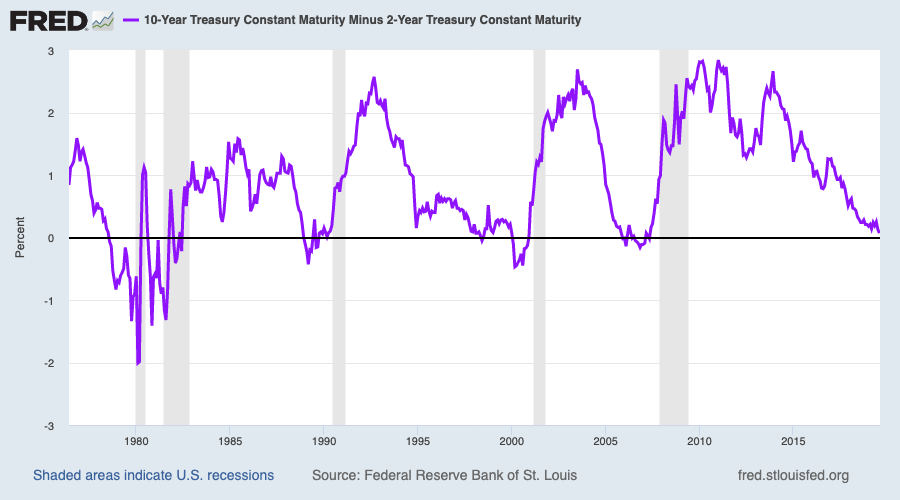
Why do I mention this? Like a baseball fouled off of a major league bat, the *yield curve on US government debt is something that is often misunderstood. As you can see in the chart below, the yield curve has a history of predicting recession when the 10 year yield is less than the 2 year yield(an inversion). However, yield curve inversions have also occurred in time periods where a recession has not followed.
My take away from this is to make sure you are always prepared for the unexpected. Routinely reviewing your financial plan and allocation is important to maintain balance and create successful long term behaviors for when curve balls come your way. A bag of ice for some bruises isn't such a bad idea either.
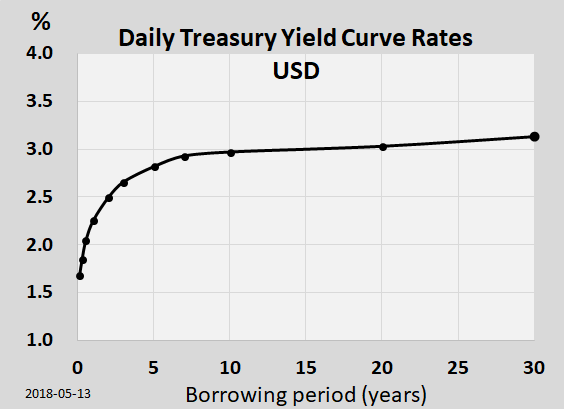
*Yield curve refers to the chart below where government debt is issued for different borrowing periods (x axis) and the interest rate payed annually per each borrowing period (yield and y-axis) is plotted.
Past performance is not indicative of future results. 09/19